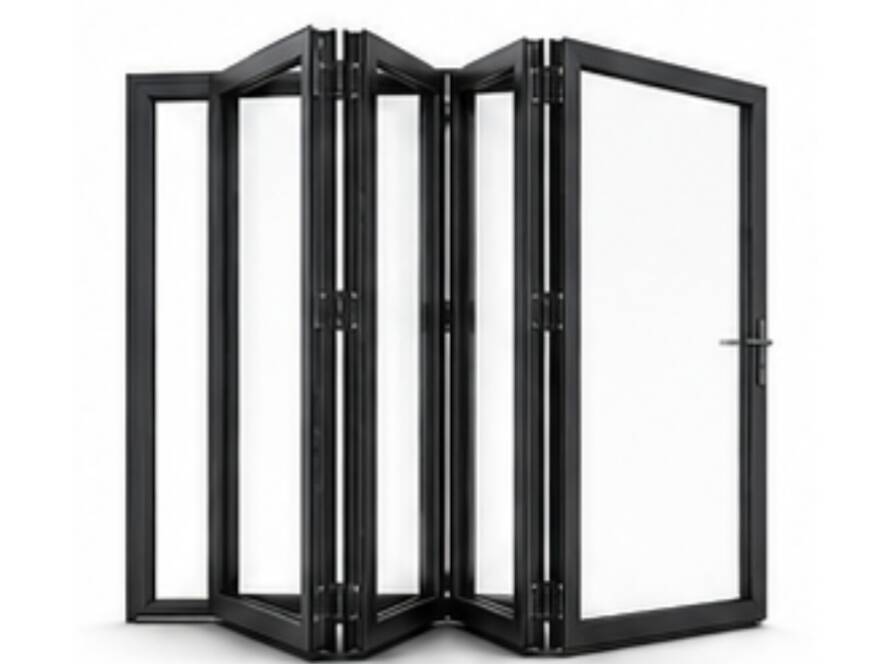
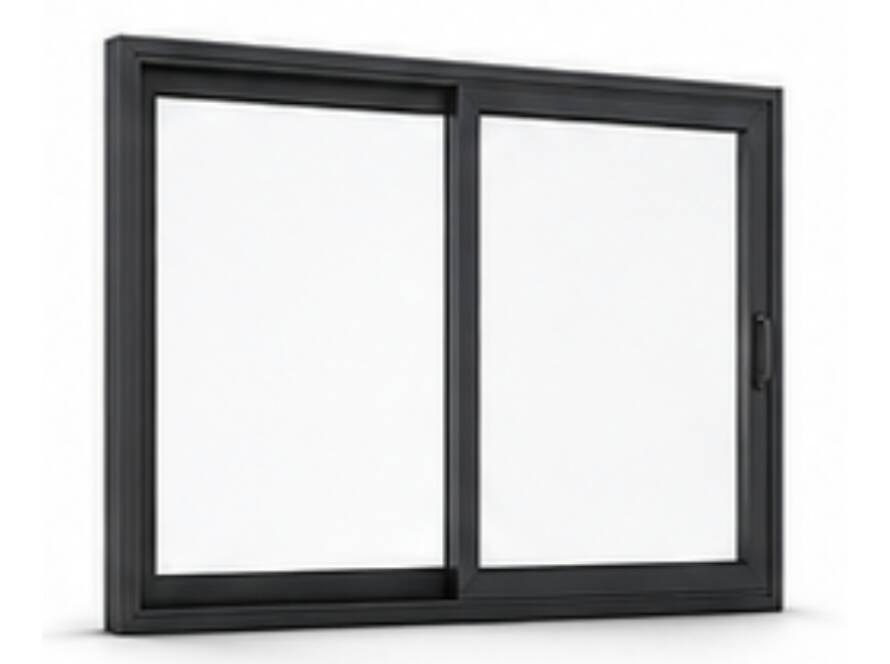
Australia’s trade remedies authority has made preliminary findings that aluminium windows and doors exported from China were dumped in the Australian market, and that some exporters received subsidies. Since 15 October 2026, importers of these goods have had to lodge financial securities at the border.
No final duties have been imposed. The Commission’s final recommendation is due by 16 December 2026, and the Minister makes the final call.
For homeowners, builders and developers planning a window and door package, the investigation raises a practical question: where are your windows and doors made, and who stands behind them?
Key points
- Investigation 691 began on 25 November 2025, after an application by Ventora Group and the Australian Glass and Window Association (AGWA).
- On 14 October 2026, the Commission published preliminary findings with dumping margins of 5.3% to 70.4% for exporters found to be dumping.
- From 15 October 2026, importers lodge securities of 5.3% to 73.3% of the goods’ value, depending on the exporter.
- Securities are not final duties. The investigation is ongoing.
- The preliminary findings deal with pricing and harm to local industry, not product quality.
What Is Investigation 691
Investigation 691 examines whether aluminium windows and doors from China were sold in Australia below fair value, and whether that harmed Australian manufacturers. It is run by the Australian Trade Remedies Commission, which was called the Anti-Dumping Commission until 29 September 2026.
The investigation covers:
- Fully or partially assembled aluminium windows and doors, including frames, panels and sashes
- Windows up to 3.0 m high × 4.0 m wide, and doors up to 3.0 m high × 7.0 m wide
- Goods classified under tariff subheading 7610.10.00
Curtain wall systems are excluded.
This is the first case aimed at finished windows and doors. Anti-dumping measures have applied to raw aluminium extrusions for more than a decade, but assembled windows and doors sat outside them as downstream products. The investigation period runs from 1 July 2024 to 30 June 2025, with harm to local industry assessed from July 2021.
What Dumping Means
Dumping happens when goods are exported at a price below their normal value, which is generally the price in the exporter’s home market. Subsidisation is when foreign government support gives exporters a price advantage.
If both are found and they cause material injury to Australian industry, the Minister can impose:
- Dumping duties to offset the price gap
- Countervailing duties to offset the subsidy
These sit on top of normal customs charges. Chinese-made aluminium windows and doors currently enter Australia tariff-free under the China-Australia Free Trade Agreement.
AGWA’s CEO, Clinton Skeoch, framed the case to the ABC as protecting competition from unfair trading, not protecting local businesses from competition.
The Preliminary Findings
On 14 October 2026, the Commission published its Statement of Essential Facts (SEF 691) and made a Preliminary Affirmative Determination. It found that all Chinese exporters except one dumped goods during the investigation period, and that this caused material injury to the Australian industry.
| Finding | Figure |
|---|---|
| Dumping margins (exporters found to be dumping) | 5.3% to 70.4% |
| Australian market size, investigation period | About $2.8 billion |
| Market share | Australian-made about 79%, China 19%, other countries 2% |
| Local manufacturers’ sales volumes, July 2021 to June 2025 | Down about 19% |
| Tenders and quotes examined | Half were about 30% below expected prices; over a quarter undercut by 40% or more |
| Estimated loss to Australian industry from undercutting | About $350 million |
Some exporters were also found to have received subsidies. The Commission proposes to recommend that the Minister publish a dumping duty notice.
The Commission did not consider product testing or quality claims in these findings. The case is about price and its effect on local manufacturers.
Source: ABC News, 15 October 2026, reporting on SEF 691 and Trade Remedies Notice 2026/147.
What Changed On 15 October
From 15 October 2026, importers of in-scope aluminium windows and doors from China must lodge securities when the goods are entered for home consumption. Rates range from 5.3% to 73.3% of the goods’ value, depending on the exporter.
- Securities are a guarantee, not a duty. They cover duties that may become payable if the Minister imposes them.
- Timing is set at customs entry. The trigger is the date goods are entered for home consumption, not the order or shipping date, so stock already in transit is affected.
- Prices may move. UNSW international economic law professor Zhou Weihuan told the ABC that importers are likely to factor securities into their pricing.
Master Builders Australia has raised concerns about construction costs while housing affordability is under pressure. Windows and doors already installed are not affected.
What Happens Next
The final recommendation is due by 16 December 2026, and the Minister’s decision is expected within 30 days of receiving it. Until then, nothing is final.
| Date | Milestone |
|---|---|
| 25 November 2025 | Investigation initiated |
| 27 January 2026 | Day 60 status report; no preliminary determination at that point |
| 14 October 2026 | SEF 691 published; Preliminary Affirmative Determination made |
| 15 October 2026 | Securities apply to in-scope imports |
| 3 November 2026 | Submissions in response to SEF 691 due |
| By 16 December 2026 | Final report and recommendation to the Minister |
| Within 30 days of the report | Minister’s decision; final report published after |
The Minister may impose final duties, set different rates, or decide not to impose them. Any article or quote that says duties are already final is getting ahead of the process.
What It Means For Your Project
If your windows and doors are being imported from China, the price, delivery date or both may now carry some uncertainty until the final decision. If they are made in Australia, Case 691 securities do not apply to them.
- Homeowners: check whether your quote is fixed, and what happens if costs change before delivery.
- Builders: review contract price clauses and programme risk on any imported package still to clear customs.
- Developers: factor possible duty outcomes into feasibility for projects with packages ordered from China.
Questions To Ask Any Supplier
- Where are the frames fabricated and the units glazed?
- If the product is imported, is it within the scope of Case 691?
- Who carries any security or duty cost: you or the supplier?
- Is the quoted price fixed if final duties are imposed?
- What lead time is committed, and what happens if goods are held at the border?
- Do the products comply with AS 2047 and AS 1288, and is a WERS energy rating available?
- Who handles warranty claims, adjustments and service, and where are they based?
Many imported windows and doors are compliant products. The questions above are about price certainty, timing and accountability.
Why Local Manufacturing Matters
Australian manufacturers supply about 79% of the local aluminium window and door market. Choosing a local maker gives you advantages that have nothing to do with where a competitor’s product comes from:
- Price certainty: locally fabricated windows and doors are not imports of finished goods, so Case 691 securities and any future duties don’t apply to them.
- Shorter lead times: no shipping schedule, port delays or border holds between the factory and your site.
- One team, measure to install: the people who measure your openings are close to the people who build the frames, so changes are made before fabrication, not after.
- Faster fixes: adjustments, replacement parts and warranty work are handled locally.
- Clear accountability: you know who made the product and who answers for it.
- Local jobs: every order supports Australian fabrication, glazing and installation work.
The Commission estimated the local industry lost about $350 million to undercutting. Keeping work in Australian factories keeps those skills here.
Made In Rowville, Victoria
Arch aluminium windows and doors are custom made at our factory in Rowville, in Melbourne’s south-east, and installed by our own team. Our showroom is a few streets away at 1 Neutron Place, so you can see the range before you order.
[Image: Rowville factory floor, wide shot with the production team]
How Your Windows Are Made
- Site measure: we measure every opening on site.
- Design and specification: we confirm configuration, glass, hardware and colour for each window and door.
- Fabrication: aluminium profiles are cut, machined and assembled to your measurements in Rowville.
- Quality checks: each unit is checked for dimensions, operation and finish before it leaves the factory.
- Installation: our installers fit the windows and doors on your site.
- After-sales support: adjustments, servicing and warranty claims come back to the same local team.
[Video: 15-second factory clip, cutting to quality check]
Every window and door is built for the opening it goes into. That suits renovations with non-standard openings and new builds where the plans change mid-project.
For Builders And Developers
Arch supplies and installs full-house aluminium window and door packages for new builds and renovations, across residential and commercial projects.
- Supply and install, or supply only: choose the scope that fits your programme.
- Drawings to quote: send plans and we quote the full package.
- One point of contact: from site measure to handover, with direct access to the factory.
- Programme alignment: production is scheduled in Rowville, not on a shipping timetable.
- Replacements: projects of two or more windows or doors.
[Image: completed residential project with Arch sliding doors and windows]
FAQs
Have anti-dumping duties been imposed on Chinese aluminium windows?
No. Since 15 October 2026, importers have had to lodge securities against possible duties. Final duties depend on the Minister’s decision after the Commission reports by 16 December 2026.
Does the investigation say Chinese windows are lower quality?
No. The preliminary findings cover pricing, subsidies and harm to Australian manufacturers. The Commission did not consider product quality testing in reaching them.
Will imported aluminium window prices go up?
Possibly. Importers now carry securities of 5.3% to 73.3% of the goods’ value, which may be built into prices. The final outcome is not yet known.
Does this affect windows already installed in my home?
No. Securities apply to in-scope goods entered for home consumption from 15 October 2026.
What does Australian made mean for windows and doors?
Under the Australian Consumer Law, a “made in” claim means the product underwent its last substantial transformation in that country. For windows and doors, that is the fabrication of profiles and glass into finished units.
How do I check where my windows are made?
Ask your supplier where the frames are fabricated and glazed, and request it in writing on your quote.
Does Arch work with builders and developers?
Yes. Arch supplies and installs window and door packages for residential and commercial projects, and quotes from drawings.
Choose Local. Choose Arch.
Know where your windows and doors come from. Arch aluminium windows and doors are made in Rowville, Victoria, and installed and supported by our local team.
Get a free measure and quote or visit our showroom at 1 Neutron Place, Rowville.
Sources
- Australian Trade Remedies Commission: Case 691, electronic public record
- SEF 691, Statement of Essential Facts, 14 October 2026
- Trade Remedies Notice 2026/147, Preliminary Affirmative Determination
- ABC News: China ‘dumped’ aluminium windows, doors in Australia, 15 October 2026
- Capral: preliminary findings on Investigation 691, 15 October 2026
- Bullocks Freightmasters: Case 691 scope and securities, 16 October 2026
- Rigby Cooke Lawyers: Day 60 status report update