Bifold and stacker doors both open a wall to the outdoors, one by folding panels aside and the other by sliding them behind each other. Which suits your home comes down to opening width, flyscreens and how the doors cope with Melbourne weather.
Key Takeaways
- Bifold doors open about 90% of the frame width. Stacker doors open around 66% to 75%.
- Stackers take standard sliding flyscreens. Bifolds need retractable screens, which cost more.
- Stackers have fewer frame sections, so more glass and slightly better thermal performance per square metre.
- Bifolds usually cost 20% to 40% more than a stacker for the same opening width.
- Choose bifolds for a full-width alfresco or servery. Choose stackers for kitchens, family rooms and windy sites.
How Each Door Works
A bifold door is a row of hinged panels that fold against each other and stack at one or both ends of the opening. Most run on a top-hung track, and one panel usually acts as a traffic door for daily use without unfolding the set.
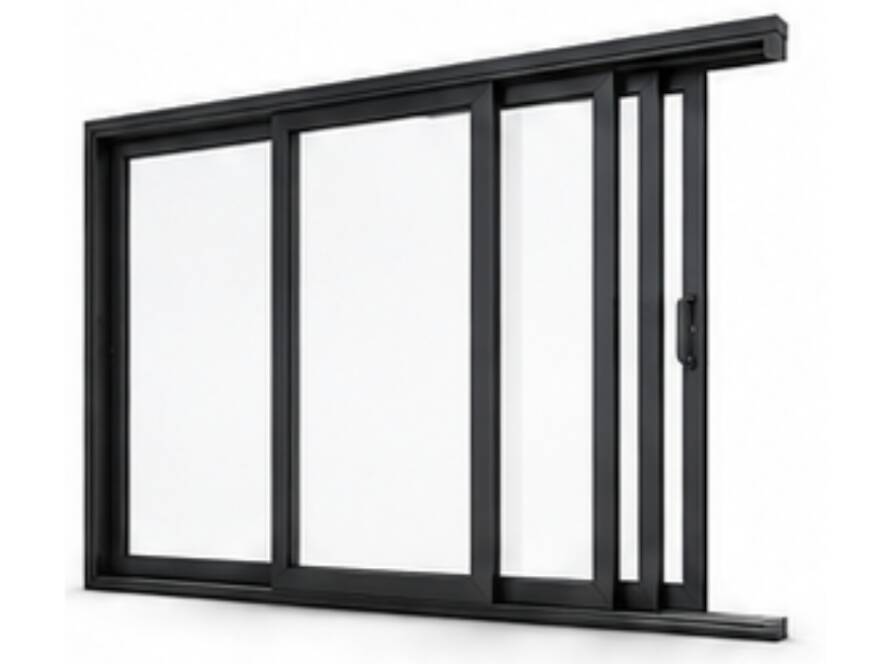
A stacker door is a sliding door with three or more panels on parallel tracks. One panel is fixed and the others slide across and stack behind it, so the moving panels never leave the frame. Both are made in architectural-grade aluminium for Australian homes because the frame stays straight across large spans.
Opening Width Compared
This is the biggest practical difference. A five-panel bifold across a 4 metre wall leaves a stack about 600 mm deep at one end, so roughly 90% of the width is open. Stackers are limited by the fixed panel: a three-panel door opens two thirds, a four-panel door three quarters.
The trade-off is where the panels go. Folded bifold panels sit proud of the wall and need about 100 mm to 150 mm of clear floor per panel. Stacker panels stay flat within the frame, which matters when a bench or barbecue sits close to the door.
Screens and Flyscreens
If screens are non-negotiable, stackers win easily. A sliding flyscreen runs on its own outer track and parks in front of the fixed panel, so the door can stay open on a summer evening.
Bifolds have no fixed panel to hide a screen behind, so they rely on retractable pleated or roller screens fitted to the reveal. These work, but they add several hundred to a few thousand dollars, need a plumb opening, and are more delicate than a framed sliding screen.
Melbourne Weather and Wind
Melbourne swings from 40 degree northerlies to cold south-westerly fronts in a single afternoon. A stacker copes well with partial openings: slide one panel across for airflow and the rest stays sealed. Bifolds are better fully open or fully closed, because a half-folded set flexes in gusts and can slam if unlatched.
Closed, both perform well if the system is rated for the site. Look for water penetration and wind pressure results tested to AS 2047, and ask about sills: bifolds seal with brush or bulb seals, so a drained sill matters on an exposed south or west wall. In bushfire prone areas, confirm the system carries the BAL rating your block requires.
Thermal Performance
Victoria now requires new homes to meet the NCC 7-star energy standard, so large glass doors need to be part of the calculation. A stacker has fewer vertical stiles per metre of opening, which means a higher glass-to-frame ratio and marginally better U-values. Bifold doors carry more frame, but the gap narrows once you specify double glazing.
For either style, a thermally broken frame with low-e double glazing is the sensible spec for a west-facing alfresco. Compare WERS ratings rather than brochure claims.
Tracks and Maintenance
Both doors live or die by their tracks. Stacker sills collect grit that wears the rollers, so vacuum the channel monthly and adjust the rollers yearly. Bottom-rolling bifolds are the most sensitive because the load-bearing track is at floor level; top-hung bifolds only need the guide channel kept clear.
Bifolds also have more hinges, seals and flush bolts, and each panel must sit square for the locks to engage.
Cost Difference
As an indicative Australian guide, a supplied aluminium stacker door for a 3 to 4 metre opening sits roughly in the $4,000 to $9,000 range, with a bifold for the same opening around $6,000 to $13,000. Double glazing or thermally broken frames add to either.
Sizes and Configurations
- Bifold panels are usually 600 mm to 1,000 mm wide and up to 2.7 metres or more high, in sets of two to eight panels.
- Stacker panels are wider, commonly 900 mm to 1,500 mm, in three, four or six panel layouts spanning 3 to 9 metres.
- Bifolds can fold left, right or split to both sides. Stackers slide one way, or open from a central fixed pair.
Which Suits Your Space
For an alfresco that becomes one room with the living area on a good day, bifolds deliver the widest opening. If the alfresco is a daily thoroughfare in all weathers, a stacker door with a screen is easier to live with.
In a kitchen, stackers are the safer pick: screens keep flies off food, and one sliding panel gives ventilation while cooking. For a servery over a bench, a short bifold set is ideal because the panels fold completely clear of the counter.
Side by Side Comparison
| Feature | Bifold doors | Stacker doors |
|---|---|---|
| Clear opening | About 90% of width | 66% to 75% of width |
| Panel storage | Folded stack proud of wall | Within the frame |
| Flyscreens | Retractable, extra cost | Standard sliding screen |
| Partial opening in wind | Fair | Good |
| Glass-to-frame ratio | Lower | Higher |
| Maintenance | Hinges, bolts, tracks | Rollers and sill track |
| Indicative cost | Higher | Lower |
| Best for | Alfresco, servery | Kitchen, family room, wide spans |
FAQ
Are bifold doors more expensive than stacker doors?
Yes, usually by 20% to 40% for the same opening. The extra cost comes from more panels, hinges and locking hardware, plus longer installation time and retractable screens if you want them.
Can you put a flyscreen on bifold doors?
You can, but only as a retractable pleated or roller screen fitted to the reveal. It works well when the opening is plumb, though it is less robust than the framed sliding screen a stacker takes as standard.
Which is better for a windy site?
A stacker. Its panels stay on the track at any position, so you can open it partway for air without the panels catching the wind. Bifolds are best fully open with the stack latched, or fully closed.
Are double glazed bifold doors worth it in Melbourne?
For a large opening facing north or west, yes. Double glazing with a thermally broken frame cuts heat gain in summer and heat loss in winter, and it helps a new home reach the NCC 7-star requirement.
Conclusion
Bifolds buy the widest opening and the most dramatic connection to the outdoors. Stackers give you screens, easier daily use and a lower price. Decide how often the doors will be fully open and let that answer choose the system. For a measure and quote on either style, you can request a free quote from Arch Windows.