Fixed windows do not open. Operable windows do. That simple difference affects your energy bills, your views, your ventilation compliance and the price per square metre of glass. Most good Australian homes use both, and the skill is knowing where each belongs.
Key Takeaways
- Fixed windows seal better, cost less per square metre and suit views, stairwells, highlights and large spans.
- The NCC requires openable areas of at least 5% of a habitable room’s floor area, so every home needs operable windows somewhere.
- Glazing choice (double glazing, low-E, thermally broken frames) affects Uw far more than whether the sash opens.
- Pairing a large fixed pane with a smaller awning window gives the view and the airflow in one opening.
- Large fixed panes need thicker or toughened glass, so size drives glass specification and price.
What Sets Them Apart
A fixed window is a single pane of glass set directly into an aluminium frame, with no sash, hinge, handle or lock. Because nothing moves, the glass is sealed permanently and the frame profile can be slimmer than an opening window of the same size.
Operable windows include awning, casement, sliding and double hung types. Each has a sash that moves within the frame, closed by hardware and sealed by compression or brush seals. Those moving parts add cost, a small air leakage path and periodic maintenance.
Neither is better in isolation. At Arch Aluminium Windows and Doors, most residential projects mix both types across the same elevation, and often within the same opening.
Where Fixed Windows Earn Their Place
Fixed glazing shines wherever you want maximum glass and minimum frame.
- Feature views: living rooms or bedrooms facing a garden or skyline, where sash frames would interrupt the outlook.
- Stairwells and voids: windows high above a landing that nobody could reach, but which light two storeys.
- Highlight windows: narrow panes above doors, benches or wardrobes that bring in daylight without losing privacy.
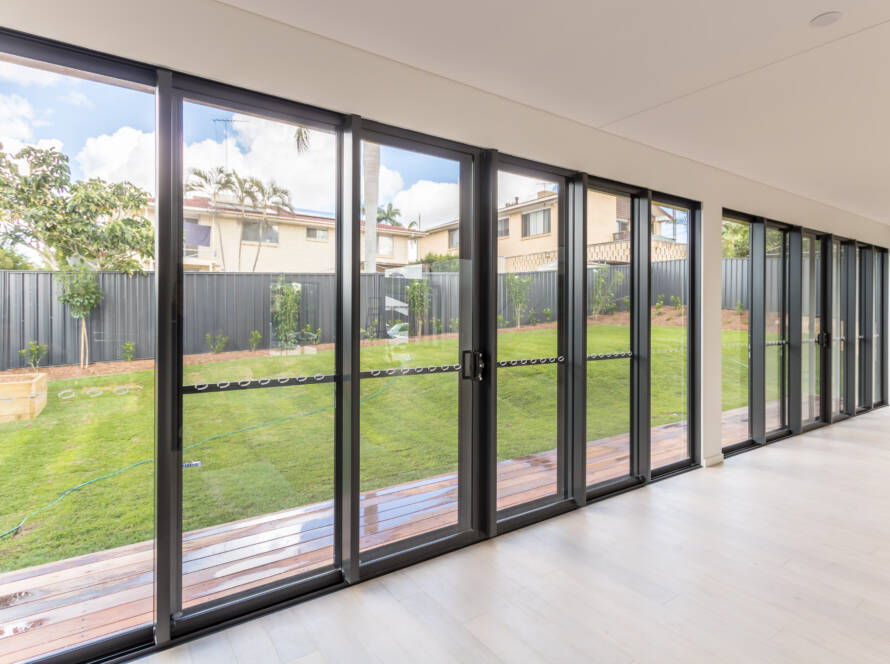
- Large spans: full height glazing beside a sliding door or across a rear elevation, where a fixed frame allows bigger panes.
Energy Performance and Sealing
A fixed window has no sash gap, so its air infiltration is close to zero. Awning and casement windows with compression seals come close, while sliding windows with brush seals leak more. In Melbourne’s NCC climate zone 6, where winter heating is the biggest energy load, that difference in draught is noticeable.
Glazing matters more than operability, though. A single glazed aluminium window typically sits around 5.5 to 6.5 W/m²K Uw, while a thermally broken frame with double glazing can reach roughly 2.5 to 3.5 W/m²K. The fixed window range at Arch can be specified with single glazing from 4mm to 12.4mm or with double glazing, and thermally broken frames are available across the thermal range. Check the WERS rating for the actual Uw and SHGC of any window you compare.
Cost Differences to Expect
Fixed windows are the cheapest style per square metre because they have no hardware, no sash and less fabrication time. As an indicative Australian market range, a fixed aluminium window often costs 15% to 30% less than an awning or casement window of the same size and glazing, and the gap widens on larger openings.
If you are weighing up a full replacement rather than a new build, our guide on the cost of replacing aluminium windows covers supply and install pricing in more detail.
Ventilation Rules You Must Meet
You cannot glaze a whole house with fixed windows. The National Construction Code requires natural ventilation for habitable rooms, with openable areas of at least 5% of the room’s floor area, unless mechanical ventilation is installed instead. A 20m² bedroom needs at least 1m² of window or door that actually opens.
Bathrooms, laundries and kitchens have their own requirements, usually met with an exhaust fan, an openable window or both. Building surveyors check this at plan stage.
Beyond compliance, operable windows are how a Melbourne home cools itself on a summer evening. Place them on opposite walls for cross ventilation, with some set high to vent hot air.
Combining Fixed and Awning
The most common combination is a large fixed pane with a smaller awning window beside or below it. The fixed section carries the view and the light, while the awning section handles airflow and can stay open in the rain because the sash hinges at the top and tilts outward.
This pairing also solves the reach problem. In a stairwell or tall living room, the fixed glazing sits high and the awning window sits at hand height, or has a chain winder. Because both share the same frame system, the sightlines match and the assembly reads as one window.
In bushfire prone areas, fixed windows are often simpler to specify at higher BAL ratings because there is no sash gap to protect, although glass and frame must still meet AS 3959.
Sizes, Glass and Cleaning
Fixed windows can be made larger than any operable style because the frame does not carry a moving sash. As panes grow, glass thickness increases to resist wind load. A small highlight might use 4mm or 5mm glass, while a full height panel could need 6.38mm laminated, 10mm toughened or 12.4mm laminated glass, depending on size, wind zone and whether it sits within 500mm of the floor under AS 1288. A large double glazed unit can weigh over 100kg, which affects handling and structure.
Cleaning is easy at ground level and awkward everywhere else. A second storey fixed window cannot be tipped inward, so budget for a water fed pole or a periodic window cleaner, or choose an operable window where access is a real concern.
FAQ
Are fixed windows more energy efficient than operable windows?
For the same frame and glazing, yes, because there is no sash gap for air to leak through. The bigger gains come from double glazing, low-E coatings and thermally broken frames, so compare Uw values rather than window type.
Can a whole room have only fixed windows?
Only if its required ventilation comes from an openable door or a mechanical system. Habitable rooms need openings equal to at least 5% of floor area under the NCC, so most rooms will need at least one operable window.
How big can a fixed window be?
Fixed windows can span several metres in width and full storey heights, subject to glass thickness and wind load. Very large panes move to toughened or laminated glass and can be joined with slim mullions for a continuous wall of glazing.
Is a fixed window cheaper than an awning window?
Usually, because it has no hardware or moving sash. As a rough guide, expect a saving of 15% to 30% for the same size and glazing, with larger savings on bigger openings.
Conclusion
Use fixed windows where the view, the light or the span matters most, and operable windows where the room needs to breathe. Combining the two in one opening usually gives the best of both. If you are planning a new build or replacement in Melbourne, request a free quote and we can help you work out which windows should open and which should not.