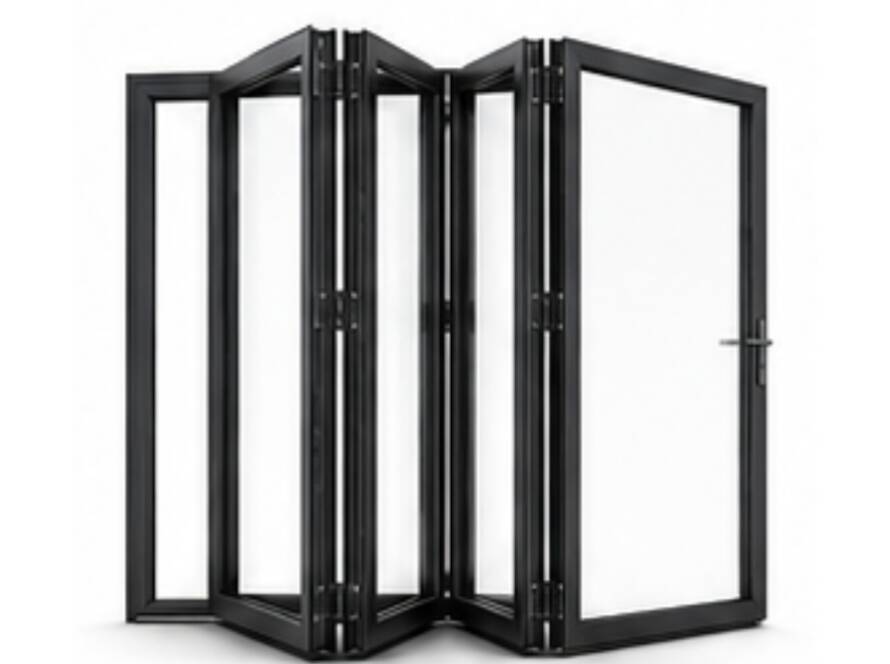
A security door is only as good as its weakest part: the infill, the frame, the locks or the fit. Most Australian homes use one of five infill types, and the right one depends on the strength you want, your home’s style and where you live.
Key Takeaways
- The five common infills are diamond grille, decorative cast aluminium grille, perforated aluminium sheet, stainless steel mesh and steel bar.
- A door that meets AS 5039 has passed impact, jemmy, pull, probe and shear tests. Ask for the test report, not just the word “compliant”.
- Locks matter as much as mesh. A triple lock and a properly fixed frame stop most forced entries.
- Indicative installed prices run from around $400 for a basic grille door to $2,500 or more for stainless mesh sliding doors.
- Bushfire and coastal sites narrow your options. Check the BAL rating and the corrosion grade before you order.
Five Security Door Materials
Every security door is a frame plus an infill. The frame is almost always aluminium, the same material Arch Aluminium Windows & Doors builds its systems from, and the infill sets the strength, look and price.
Diamond Grille
The traditional Australian security door: a 7mm aluminium grille in a diamond pattern, riveted into the frame, with a fly screen behind it. It is the cheapest option and resists corrosion well, but blocks a fair share of your view. It suits side and rear doors where cost matters more than looks.
Decorative Cast Aluminium Grille
Cast aluminium panels in heritage or geometric patterns, suited to period homes and formal entries. Strength varies widely between patterns, so look for a tested product rather than assuming heavier is safer.
Perforated Aluminium Sheet
A single aluminium sheet, usually around 1.6mm thick, punched with thousands of small holes. It gives a near-uninterrupted view, keeps insects out without a separate fly screen and costs less than stainless mesh. Aluminium is softer than steel, though, and easier to dent or cut.
Stainless Steel Mesh
Woven 316 marine-grade stainless steel wire, typically 0.8mm to 0.9mm, clamped into the frame with a screw or wedge system. It is the strongest common infill, gives the clearest view, shrugs off Melbourne weather and doubles as a fly screen. It is also the most expensive, and the clamping system matters as much as the mesh.
Steel Bar
Welded steel doors are strong but heavy, and mild steel rusts unless powder coated and maintained. They are now mostly seen on commercial premises.
Understanding AS 5039 Compliance
AS 5039 sets the performance requirements for the door, AS 5040 covers installation and AS 5041 sets out the test methods. A door built to AS 5039 can still fail if it is fitted outside AS 5040, so the installer matters.
To pass, a door must survive:
- Dynamic impact: five pendulum strikes of roughly 100 joules each without the infill separating from the frame.
- Jemmy test: a lever applied at the lock, hinges and corners.
- Pull test: a sustained pull on the infill to check the fixing system.
- Probe and shear tests: a blade pushed and dragged across the infill to simulate cutting.
Fly screen doors and many decorative grilles do not meet the standard. Ask for the NATA test certificate for the exact door, infill and frame combination you are buying.
Hinged Versus Sliding
Hinged security doors suit front entries and any single swing opening, and are simpler and cheaper to fit well. Sliding security doors run on the outside track of a sliding or stacker door and need a heavier bottom rail, good rollers and an anti-lift block.
If you are replacing the whole opening, match the security door to the new frame from the start. Arch designs and installs aluminium security doors to suit its own sliding and hinged systems, so tracks, colours and sight lines line up.
Locks, Frames and Hinges
Most forced entries through a security door happen at the lock or hinge, not the mesh. Specify:
- A triple lock: one handle throwing three bolts into the frame, top, middle and bottom.
- A deadlocking latch that cannot be slipped with a card.
- Hinges with fixed pins or a hinge-side security bolt so the door cannot be lifted off.
- Frame fixings every 300mm to 400mm into solid material. A frame screwed to a hollow reveal at three points fails before the mesh does.
Pet Doors and Insurance
A pet door can be cut into any infill, but a large flap is a hole an arm can reach through. Keep it well below handle height, choose a lockable version and accept the door no longer meets AS 5039 as a whole.
Insurers rarely discount premiums for a security door, but some policies require screens and locks to be engaged for a claim to succeed.
Bushfire and Coastal Homes
In BAL-12.5 to BAL-29 zones, AS 3959 requires screens over openable doors to be corrosion-resistant steel, bronze or aluminium mesh with a maximum 2mm aperture. At BAL-40 and BAL-FZ, aluminium is out and steel mesh is required. Stainless mesh and perforated aluminium meet the aperture rule; a diamond grille alone does not.
Near the coast, salt air corrodes aluminium and mild steel. Specify 316 stainless mesh rather than 304, a marine-grade powder coat and stainless fasteners, and rinse the door with fresh water regularly.
Matching Your Existing Doors
Match the powder coat colour, keep the mid-rail at the same height as the door behind it, and choose a slimline profile if the existing door is a narrow section. Where a front entry is being replaced, a matching aluminium entry door and security door ordered together share the same colour batch and hardware finish.
Indicative Costs
Installed prices vary with size, lock and finish, but as a guide:
- Diamond grille hinged door: $400 to $900.
- Perforated aluminium hinged door: $700 to $1,500.
- Stainless steel mesh hinged door: $900 to $2,200.
- Sliding security door in any infill: add $300 to $800 to the hinged price.
- Double or French security doors: roughly double a single door.
FAQ
Which security door type is strongest?
Stainless steel mesh in a well-clamped aluminium frame performs best in AS 5039 testing. Welded steel bar doors are also strong but heavy and prone to rust.
Do I need a fly screen behind a security door?
Not with perforated aluminium or stainless mesh, because the infill already keeps insects out. Diamond and cast grille doors need a separate fly mesh behind the grille.
Can a security door be fitted to a stacker door?
Yes, provided the outer track can carry a heavier panel and there is clearance for the frame. A sliding security door with an anti-lift block and triple lock is the usual solution.
Are security doors worth it in Melbourne?
Yes. They let you leave a door open for cross-ventilation on warm nights without losing security, and in bushfire-prone outer suburbs a fine mesh screen also gives ember protection.
Conclusion
Choose the infill for the strength and view you want, the lock and frame for how the door will be attacked, and the finish for where you live. For security doors that match new aluminium doors or windows, request a free quote from Arch.